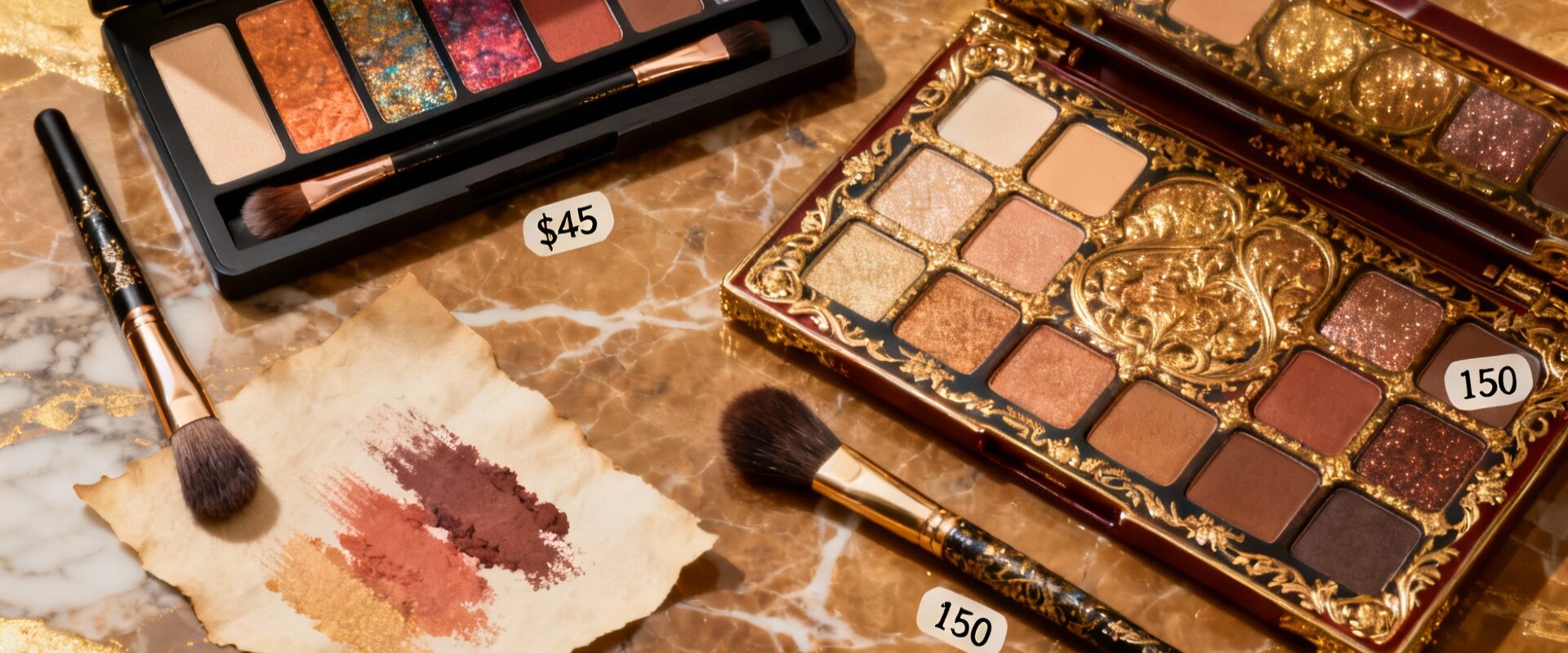
If you’ve ever swatched a $150 designer palette and wondered, “Is this actually worth it?”—you’re in the right place. We put a $45 palette and a $150 palette head-to-head to see where the money really goes: pigment payoff, blendability, fallout, and true long-wear performance on real lids (including 30+ skin with some texture). Consider this your luxury beauty cheat sheet before you splurge—or save.
What You’re Paying For: Formula, Fill, and Finish
On paper, both palettes promise rich color and effortless blend. In practice, high-end formulas often invest in finer-milled pigments, better binding agents, and specialized textures (cream-to-powder, gelée metallics, or wet-dry foils). These upgrades can mean smoother application, less patchiness in mattes, and light-catching shimmers that look expensive rather than glittery.
- Pigment quality: Higher-grade colorants and pearls tend to deliver impact with less product. You’ll see more even laydown and less dustiness in the pan.
- Binders and emollients: Luxe formulas often include silky esters and grip-enhancing polymers that help shadow adhere and stay vibrant longer—especially crucial on oilier lids.
- Press & particle size: Finer milling = softer blend and less texture accentuation. This matters for mature lids where heavy powders can emphasize lines.
- Shade curation & consistency: Designer palettes typically offer a considered range of depths and undertones that mix and match cleanly, minimizing muddiness as you layer.
Does that mean every $150 palette outperforms every $45 one? Not always. Some mid-range brands rival luxury with smart formulations. But premium palettes more consistently deliver across matte, satin, and metallic finishes.
Pigment Payoff vs. Blendability: Where Price Shows Up
Bold swatches can be deceiving. True luxury performance shows when you blend two or three mattes and the transition still looks seamless. Cheaper mattes may go dark and patchy, forcing more work and more cleanup.
- Mattes: Look for even coverage in one to two passes without skipping. If a matte drags or clings to one spot, you’ll fight patchiness on the eye.
- Metallics & shimmers: Foiled and gelée textures in high-end palettes typically give a smoother, high-shine finish with less chunky fallout. They photograph beautifully and flatter textured lids.
- Buildability: The best palettes layer without turning gray or muddy. This is where upscale pigment purity and binder balance really matter.
Tip: Don’t judge only by finger swatches. Use a clean brush on bare skin and over primer to see how a shade builds and blends in real life.
Longevity & Creasing on Real Lids (28–50+)
As we age, lids can become slightly more hooded or textured, which exposes weak formulas fast. A palette with great grip and fine milling will crease less, fade slower, and require fewer touch-ups.
- Primer is non-negotiable: A thin layer of a silicone-free, gripping eye primer can extend wear by hours. If you prefer concealer as a base, set it lightly with a skin-toned powder before shadow.
- Thin layers win: Apply mattes in sheer layers and build. This reduces weight on the lid and helps prevent creasing.
- Use the right tools: Dense shader brushes for packing color; soft, airy brushes for blending edges; fingertip or damp brush to press metallics with minimal fallout.
- Setting strategy: A quick mist of setting spray over a finished look can lock down shimmer and soften powderiness.
The Wear Test: $45 vs $150 Palettes
In a controlled test (same primer, application technique, and setting), here’s the pattern we repeatedly see:
- First 2 hours: Both price points look similar if you used a quality primer. The luxury shimmers tend to appear smoother and more reflective.
- Hours 3–6: Mid-priced mattes may start to lose intensity and require a quick touch-up; luxury mattes maintain depth with less fading and less fallout under the eye.
- Hours 7–10: High-end formulas generally crease less and retain true-to-pan color longer. Metallics from luxury palettes keep their sheen without turning dull or flaky.
The takeaway: You can absolutely get gorgeous looks from a well-formulated $45 palette, especially for daytime or short events. If you want reliable 8–10 hour wear with minimal maintenance—particularly on oilier or textured lids—the right $150 palette often delivers a smoother ride.
How to Choose Your Best Palette—Save or Splurge
- Identify your undertone: Cool, neutral, or warm? A palette aligned to your undertone makes blending easier and looks more expensive on the eye.
- Count the workhorse shades: You want at least one deep matte, one mid-tone transition, one brightening shimmer, and one topper. If a luxury palette lacks a true depth shade for your skin tone, you’ll still need another palette.
- Price per gram: Compare total weight, not just sticker price. Some $45 palettes rival designer price-per-gram value.
- Finish variety: For versatility, look for a mix of velvet mattes, satin/pearls, and one high-shine option.
- Your lifestyle: If you need budge-proof office-to-dinner wear, splurge on the formula. If you love experimenting with color and trends, a great $45 palette can be perfect.
Pro Application Tips for More Pigment and Longer Wear
- Prep: Clean, dry lids. Apply a thin eye primer and let it set 30 seconds.
- Map first: Place your mid-tone matte in the crease, then deepen outer corner. Add shimmer last.
- Press, don’t sweep: Pack color with a dense brush, then blend edges with a clean, fluffy brush to avoid lifting pigment.
- Foils with a damp brush: Lightly mist your brush with setting spray before picking up metallics for maximum shine and minimal fallout.
- Set strategically: If you have oily lids, tap a touch of translucent powder on the brow bone and outer corner to reduce transfer.
Editor Picks: When to Splurge vs. When to Save
If you’re ready to shop, these palettes consistently perform in pigment payoff, blendability, and longevity.
- Pat McGrath Labs Mothership Eyeshadow Palette – Ultra-refined mattes and couture metallics that look like liquid light. The special shades deliver instant editorial drama with surprisingly low fallout. A true splurge that pays off if you want luxe impact and all-day wear.
- Natasha Denona Glam Eyeshadow Palette – Neutral perfection with cool-to-neutral undertones, flattering on a wide range of complexions. The mattes blend themselves and the shimmers are smooth and sophisticated, not glittery.
- Charlotte Tilbury Luxury Palette in Pillow Talk – A streamlined quad that’s foolproof for everyday glam. The textures are silky, the color story is wearable, and it’s ideal if you want a polished look fast.
Budget-friendly tactic: If you choose a $45 palette, invest in a great primer and two quality brushes. You’ll unlock more pigment and wear time without adding bulk to your makeup bag.
The Bottom Line
A $150 designer makeup palette often wins on texture refinement, shade cohesiveness, and true long-wear—especially over 8–10 hours on textured or oilier lids. But a smartly chosen $45 palette can absolutely deliver luxury-looking results with the right prep and technique. If all-day performance and effortless blend are non-negotiable, splurge strategically. If you love variety or are building your kit, save wisely and elevate with primer and tools. Either way, you’ll get the glow—without the guesswork.
This post contains affiliate links. We may earn a commission when you shop through our links.