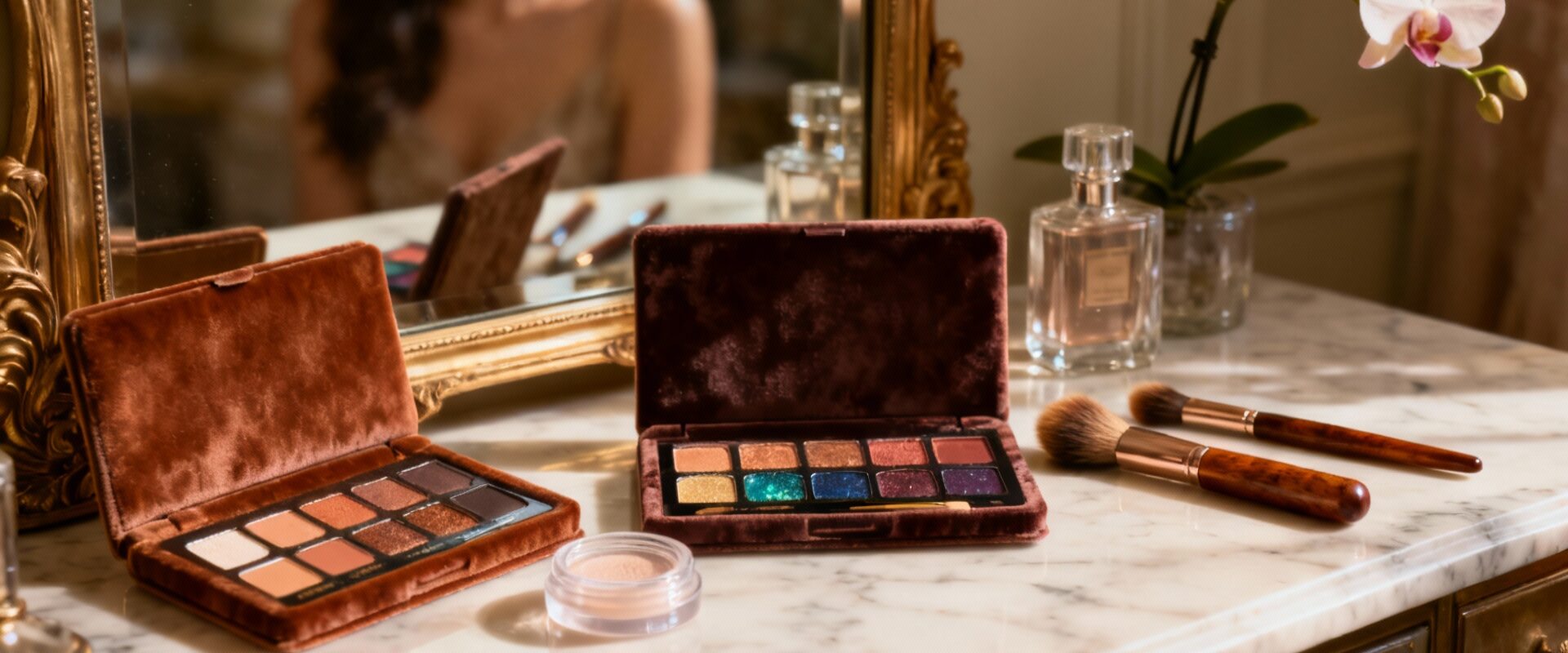
You splurged on a gorgeous palette—silky mattes, glimmering shimmers, the works—yet your eye look still reads patchy, muddy, or disappears by noon. It’s not you (or your palette). It’s a handful of fixable mistakes. In this Glow Curated guide, I’ll show you the five most common eyeshadow palette mistakes that quietly kill your look—and exactly how to correct them for crease-proof, blended, luxury-level results. Whether your lids are hooded, mature, or simply time-poor, these techniques will make every palette you own perform like it cost double.
Mistake 1: Skipping Proper Eye Prep
Shadow clings to whatever it touches—oil, fine lines, or dry patches. If you’re applying directly over skincare or concealer, you’re asking for creasing, dull payoff, and uneven blending.
Fix it:
- Use a thin layer of a dedicated eye primer. A smoothing, grip-friendly formula evens texture and extends wear without heaviness. Try the Hourglass Veil Eye Primer for a weightless, crease-resistant base.
- Let your eye cream fully absorb. On mature lids, go for a minimal amount of hydrating eye cream, wait 5 minutes, then primer.
- If you have very oily lids, lightly set primer with a whisper of translucent powder only where you crease most.
- Avoid thick concealer on lids; it’s not designed to grip powder pigments like a true primer.
Pro tip for mature/hooded lids: Keep shimmer off the deepest part of the crease where texture is most visible. Place sparkle on the mobile lid and inner corner to brighten without emphasizing lines.
Mistake 2: Using the Wrong Brushes (or the Right Ones Wrong)
Great palettes can look average with the wrong tools. Fluffy brushes don’t place color well; dense brushes don’t blend softly. You need a small, strategic wardrobe.
Fix it:
- Placement brush: A small, flat shader to pack color on the lid without fallout.
- Detail blender: A petite, tapered brush for the outer corner and crease. Essential for hooded eyes where space is limited.
- Fluffy blender: For diffusing edges only—use it clean to soften, not to move color around.
- Pressure controls payoff: The lighter your pressure, the smoother the blend. Choking up on the ferrule = harsh; holding the end of the handle = airy.
Pro tip: Keep a clean blending brush on standby. After placing color, use the clean brush to melt edges. No extra product, no muddy mess.
Mistake 3: Ignoring Undertone and Depth (Your Transition Shade Isn’t Right)
If your shadows turn gray or orange, you’re fighting undertone and depth. The transition shade—the first matte you sweep through your crease—anchors the entire look. Get it wrong and everything that follows skews off.
Fix it:
- Match undertone: If your skin leans warm, pick a warm beige/tan transition. If cool, choose a taupe/soft rose-brown. Neutral? A balanced beige or the bronzer you use on your face works beautifully.
- Get the right depth: Your transition should be roughly 1–2 shades deeper than your skin tone. Too light = chalky. Too dark = instantly smoky, hard to blend.
- Color story matters: Working with olive skin? Skip hyper-warm orange as a transition; choose olive-leaning browns. Fair, cool skin? Avoid red-browns in the crease unless you want a deliberately warm look.
Pro tip: Swatch potential transitions on your jawline. If it could pass as a subtle contour there, it will likely be a great transition on your eye.
Mistake 4: Over-Blending into Mud (and Layering in the Wrong Order)
Blending doesn’t mean windshield-wipering everything together. That’s how you lose contrast and vibrancy.
Fix it:
- Place, then blend edges: Pat your shade where you want it, then soften just the border. Keep the center rich.
- Build from light to dark: Transition first, mid-tone next, depth shade last. Deep shades are hardest to blend—save them for precise placement.
- Mind your formulas: Mattes blend best into mattes. Lay down your matte structure first, then press shimmers on top with a fingertip or damp brush.
- Clean tools: A stained brush keeps moving pigment around. Use a quick color switch between shades.
Rescue tip: If things go muddy, don’t add more shadow. Use a tiny bit of skin-toned powder to erase and re-establish a clean edge, then reapply only where needed.
Mistake 5: One-Size-Fits-All Placement (Ignoring Your Eye Shape)
The most expensive palette can flop if placement fights your anatomy. Tailor your map to your eye shape for instant polish.
- Hooded eyes: Create your “crease” slightly above your natural fold while eyes are open and relaxed. Keep the deepest shade close to the lash line and outer third. Shimmer stays on the mobile lid only.
- Deep-set or prominent brow bone: Use softer transitions and concentrate depth on the outer third; avoid taking dark shades too high.
- Downturned eyes: Lift with a soft, upward-angled outer V. Keep lower lash line light on the inner half and slightly deeper on the outer half.
- Monolids: Build a gradient from lash line upward with thin layers. Cream-to-powder shimmers pressed on the lid add dimension without emphasizing texture.
Pro tip: Do your eyes first. You can clean fallout and perfect the wing before complexion—especially important with richly pigmented luxury palettes.
Worth the Splurge: Palettes and Primers That Perform
Yes, quality matters. High-end formulas use finer pigments and sophisticated binders that layer and blend with less effort. If you want that effortless, editorial finish, these are standouts:
- Hourglass Veil Eye Primer: A smoothing, weightless base that locks shadow for 8–12 hours and minimizes creasing on mature lids without heaviness.
- Tom Ford Eye Color Quad: Curated color stories with elegant mattes and luminous shimmers that blend seamlessly and look expensive in one pass—great for day-to-night refinement.
- Pat McGrath Labs Mothership Eyeshadow Palette: Iconic payoff, sophisticated textures, and special-effect shimmers that deliver high-impact glam with minimal effort when used over a good primer.
Quick Step-by-Step: A 5-Minute Polished Eye
When time is tight, this simple sequence gives you a clean, lifted look that flatters most eye shapes.
- Prime: Apply a thin layer of Hourglass Veil Eye Primer. Let set for 30 seconds.
- Transition: Sweep a soft, undertone-matching matte through your (created) crease with a fluffy brush.
- Define: Use a small tapered brush to press a deeper matte on the outer third and slightly above your crease, then softly blend just the top edge.
- Lid: Press a satin or shimmer on the mobile lid with your fingertip for maximum payoff. Keep sparkle away from the crease if texture is a concern.
- Finish: Tightline, curl, and mascara. Optional: a touch of highlight at the inner corner.
Troubleshooting and Extra Polish
- Fallout: Tap your brush, work in thin layers, and press shimmers on. If using glittery toppers, dampen the brush with setting spray first.
- Creasing midday: Use less primer and shadow. More product often equals more slip. Set only the crease fold with a touch of translucent powder if needed.
- Color looks dull: You’re likely over-blending or fighting undertone. Reinforce the lid shade with a fingertip and ensure your transition supports your skin tone.
The takeaway: Luxury results aren’t about owning every palette—they’re about precision. Prep smart, choose the right transition, blend edges (not everything), and map your placement to your eye shape. With a strong base like Hourglass Veil Eye Primer and well-formulated palettes such as Tom Ford Eye Color Quad and Pat McGrath Labs Mothership Eyeshadow Palette, every look reads intentional, seamless, and absolutely worth the splurge.
This post contains affiliate links. We may earn a commission when you shop through our links.